
Property owners across St. Lucie County frequently ask whether they can bypass the tear-off phase and fasten a brand-new metal roof directly on top of an existing shingle layer. The motivation is easy to understand: avoiding dumpster rentals in the driveway, speeding up completion times, and trimming initial labor expenses.
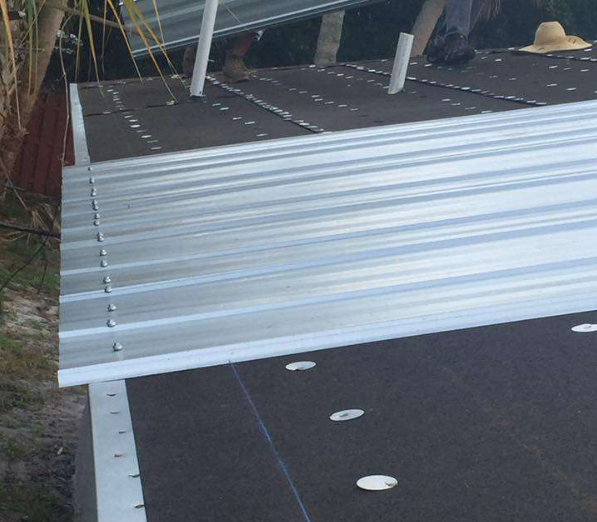
While the Florida Building Code permits specific metal roofing assemblies over a single layer of asphalt shingles under tight engineering constraints, opting for a “roof-over” is rarely the smartest investment for Treasure Coast homes.
In communities like Port St. Lucie, Fort Pierce, Tradition, and St. Lucie West, relentless tropical weather relentlessly challenges residential structures. Installing metal panels over old asphalt shingles traps unseen wood rot, triggers visible surface flaws, and jeopardizes critical insurance premium discounts.
Here is what St. Lucie County homeowners should consider before choosing a roof-over instead of a full tear-off.
1. The Underlying Roof Deck Cannot Be Inspected or Re-Nailed
A metal roofing system depends entirely on the stability of the plywood or OSB substrate beneath it. If aged shingles are left in place, your roofer cannot inspect the structural deck from above.
A complete tear-off allows a certified contractor to:
- Detect hidden delamination, soft spots, and sagged decking.
- Replace rotten or water-compromised wood before new materials are applied.
- Re-nail the wood deck to satisfy updated Florida Building Code high-wind fastening schedules—greatly increasing resistance to tropical cyclone wind uplift.
Bypassing the tear-off forces screws to travel through brittle asphalt and deteriorated felt before anchoring into decking of unverified strength.
2. Moisture Intrusion and Deck Deterioration Remain Trapped
If the existing shingle roof ever had a minor leak, placing metal over it seals in that moisture rather than resolving it.
- Weakened Screw Grip: Fasteners driven into softened, damp decking lack the structural pull-out resistance required to keep panels anchored during severe summer storms.
- Hidden Mold and Decay: Encapsulated moisture under solid metal panels creates a greenhouse effect, accelerating attic wood rot and degrading insulation.
- Expensive Downstream Repairs: When trapped rot is inevitably discovered later, repairing it requires removing custom-cut metal panels, resulting in labor costs that far exceed the price of an initial tear-off.
3. Complications with St. Lucie County Wind Mitigation & Insurance Credits
Many homeowners choose metal roofing specifically to qualify for valuable wind mitigation credits on their property insurance. However, adding metal over an existing shingle layer can hinder your inspection:
- Unverifiable Fastener Depth & Spacing: The Florida Wind Mitigation form (OIR-B1-1802) requires certified inspectors to verify deck attachment patterns and secondary water barriers (SWR). When shingles remain beneath the metal, inspectors often cannot confirm these required details.
- Tighter Underwriter Criteria: Property insurance carriers in St. Lucie County are increasingly strict. Many underwriters decline to issue discounts—or refuse coverage altogether—for roofs installed over prior coverings without bare-deck verification.
Always check with your insurance provider about their underwriting rules before signing a contract for a roof-over.
4. Shingle Flaws and Lumps Telegraph Through the Metal Panels
Asphalt shingles don’t age uniformly. Under the South Florida sun, shingles curl, blister, and crack over time.
Metal panels—especially sleek standing-seam profiles—demand a flat, uniform substrate:
- Fastening panels over uneven shingles causes underlying bumps to telegraph to the surface, resulting in noticeable panel waviness and oil-canning under bright daylight.
- Stripping down to the bare deck allows the installation of flat, high-temperature self-adhering underlayment, ensuring crisp, professional lines that enhance curb appeal.
5. Risk of Non-Compliance with Florida Product Approvals
Every hurricane-rated metal roofing system installed in Florida must have a valid Florida Product Approval (FL#) that dictates precise installation instructions.
- These approvals outline allowable substrates, anchor clip types, fastener gauge, spacing intervals, and maximum design pressures.
- Many standing-seam systems are only engineered and approved for installation directly over a bare deck lined with an approved self-adhering underlayment.
- Installing a system outside its specific approval scope can fail St. Lucie County building department inspections, void manufacturer warranties, and compromise structural performance during high winds.
Is a Roof-Over Ever Legal in Florida?
Yes. Florida Building Code does permit an approved metal roof assembly over a single layer of existing asphalt shingles under specific, documented parameters.
However, code-compliant does not mean optimal. To ensure lasting storm protection, a complete tear-off down to the bare decking is the only reliable method to uncover rotted wood, secure verified wind mitigation ratings, and protect your home for decades.
Questions to Ask Before Accepting a Roof-Over Estimate
Before moving forward with an estimate, ask the contractor:
- What is the Florida Product Approval number (FL#) for this specific metal assembly, and does it explicitly permit installation over shingles?
- How will you verify that the underlying roof decking is sound and free of rot?
- How will this installation method impact my Wind Mitigation inspection report and insurance discounts?
- Will installing over shingles alter the manufacturer’s product or paint warranty?
- Does the proposal include full permitting and final inspections through the St. Lucie County or local municipal building department?
Schedule an Honest Roof Evaluation in St. Lucie County
Whether you are considering a standing-seam metal upgrade or need a thorough evaluation of an aging shingle roof, work with a Treasure Coast roofing team that prioritizes structural safety and code compliance over shortcuts.
One Construction & Roofing Contractors
- Phone / Text: 772-200-1609
- Website: www.oneconstruction.com
- Florida State Certified Roofing License: CCC-1330623
- Service Area: Port St. Lucie, Fort Pierce, Tradition, St. Lucie West, and communities throughout St. Lucie County & the Treasure Coast